
DuraFlex Chimney Sweep in Great Kills: A Homeowner’s Guide
Most DuraFlex liner failures we’re asked to diagnose in Great Kills don’t start with the product. They start three steps earlier, when a flue gets relined over residual creosote, loose mortar, or spalled tile fragments that were never properly removed. A DuraFlex system poured or applied over a dirty substrate won’t bond correctly, and the homeowner usually doesn’t find out until the liner cracks within a few heating seasons. This guide walks through what the sweep-to-liner workflow should actually look like, so you can hold any contractor accountable before the work begins. If you’d rather have the inspection done first and the recommendations second, call (866) 937-8578 for a free estimate.
Why a Level 2 Inspection Has to Come Before Any DuraFlex Application
A Level 2 inspection with a camera is the only way to know what condition your flue is actually in before DuraFlex goes near it. The inspection runs a video camera the length of the flue and documents offsets, cracks, gaps in the tile joints, and any previous liner residue. Without that footage, a contractor is guessing at what the new system will sit against, and guessing is how liners fail.
What gets missed when the inspection is skipped or rushed:
- Spalled tile fragments still clinging to the flue wall. DuraFlex needs a clean, sound surface to bond to. Loose fragments create voids behind the new system.
- Residual creosote left from the previous heating season. Creosote is combustible and acidic; new material over it is a fire risk and an adhesion problem at the same time.
- Offsets and misalignments in older masonry flues. If the flue isn’t straight or the tile joints are broken through the whole run, the liner choice may need to change entirely.
- Hidden cracks in the smoke chamber above the damper. A new flue liner doesn’t fix a compromised smoke chamber sitting below it.
- Connection points at the appliance. The flue connector and the firebox opening both need to be sized and evaluated for the liner to work.
We lead with the inspection for this reason. It’s also the step that lets us tell a Great Kills homeowner, in plain terms, whether resurfacing or full relining is the right call and why. A camera inspection with a documented photo report means you can see the evidence yourself, not take anyone’s word for it. Our technicians have up to 10 years of experience reading these reports, and the footage is yours to review before you book anything.
What DuraFlex Actually Is, and When It’s the Right Call
DuraFlex is a flexible stainless-steel relining system. It’s engineered for chimneys where the original masonry flue has deteriorated, cracked, or was never sized correctly for the appliance. The flexible construction lets it follow the contours of an offset or non-straight flue that a rigid liner couldn’t navigate. That’s what it is in one sentence: a flexible stainless liner that restores a usable flue without tearing out masonry.
DuraFlex is the right call when:
- The flue has cracks, gaps, or missing tile sections that let heat and gases escape into the surrounding structure.
- You’re upgrading to a modern appliance that wants a different flue size than the original masonry provided.
- The flue run has offsets or bends a rigid liner can’t pass through.
- The chimney is otherwise structurally sound, and the problem is isolated to the flue interior.
DuraFlex is not the right call when the chimney has structural problems above the flue itself, like a crumbling crown, a cracked smoke chamber, or a firebox that needs rebuilding. Those need to be addressed separately or the new liner will just sit on top of an unresolved problem. The flue and the box need to be evaluated together, which is why one contractor covering the complete chimney from firebox to cap reduces the risk of the left hand not knowing what the right hand is doing.
For flues where a full reline isn’t necessary, HeatShield resurfacing is often the less invasive option. HeatShield rebuilds the flue’s interior surface without adding a stainless liner, saving on cost when the flue is intact enough to resurface rather than reline. The choice between DuraFlex and HeatShield shouldn’t be a sales decision. It should follow what the camera shows.
How a DuraFlex Reline Should Be Poured, and How to Read the Quote
A DuraFlex quote should itemize the prep work, not bundle it into one line that says “installation.” Prep is where the quality of the finished system lives, and it’s the first thing that disappears when a contractor wants to give you a leaner number. The workflow a fair quote reflects:
- Level 2 camera inspection, documented with photos before any work starts.
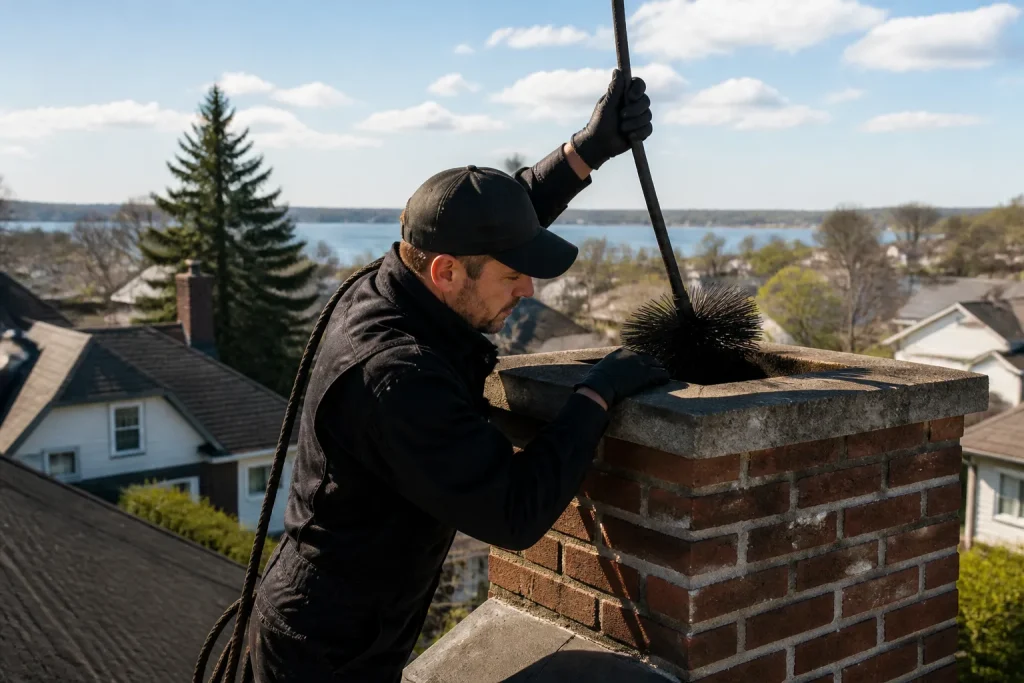
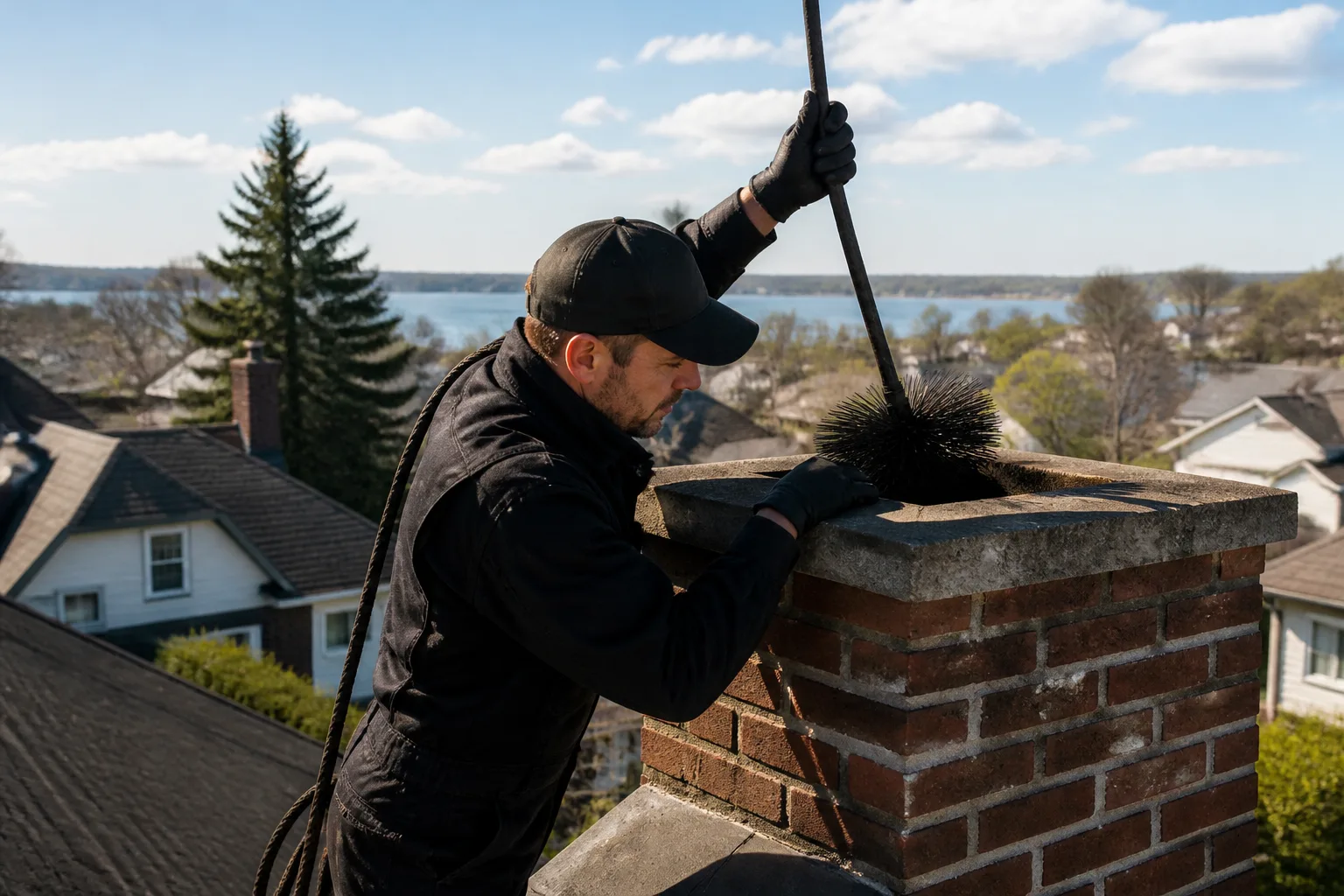
- Thorough flue cleaning. Mechanical sweeping of the full run from the top down and the bottom up, with all debris removed from the firebox.
- Evaluation of the smoke chamber, damper, and firebox to confirm no repairs are needed below the flue.
- Flue preparation. Scraping or wire-brushing to remove any remaining buildup and stabilize loose material.
- DuraFlex system installation, correctly sized for the appliance and properly supported at the top.
- Top termination and cap, sealed and weather-tight at the crown.
- Post-installation verification, including a second camera pass or a draft test to confirm everything is seated.
If the quote you’re reading has one line for “cleaning and installation” and no mention of inspection or verification, ask what’s actually happening inside those words. Any spec home in Great Kills with an older masonry chimney may need extra prep work that a bundled number won’t cover, and you’ll only find out after the crew is on the roof.
Flue Conditions Common in Great Kills Homes That Affect DuraFlex Longevity
Great Kills has a lot of mid-century masonry chimneys, and most of them were built with tile flues that have had decades of heating cycles behind them. That history creates specific conditions we look for before signing off on a DuraFlex job.
Hairline cracks in the tile look harmless from the hearth but show up clearly on camera. They let moisture into the masonry and can shift the size of the flue enough that the DuraFlex system sits tighter than its rating allows. Spalled tile joints are more common in these homes than you’d expect, especially in chimney interiors that have seen a lot of burning seasons without a sweep. Original sizing is another one. Many of these flues were sized for the original wood-burning appliance, and if you’ve replaced that with a modern insert or high-efficiency unit, the DuraFlex liner needs to be sized for the new appliance, not the old flue.
Exterior chimney exposure matters too. A chimney on an outside wall of a Great Kills house runs colder than one on an interior wall, which means more condensation inside the flue during the heating season. Condensation mixed with unburned wood byproducts becomes acidic and attacks both the masonry and the liner surface, so a properly sealed cap and crown isn’t cosmetic. It’s part of protecting the liner you just paid for. Our chimney cap & crown work uses Gelco and Famco components for exactly this reason.
Season to season, a DuraFlex system installed over properly prepared substrate in a Great Kills home should perform for decades. The same system installed over a rushed cleaning can degrade in far fewer heating seasons. That difference is entirely in the prep.
Questions to Ask Before You Sign a DuraFlex Contract in Great Kills
Bring these questions to any DuraFlex estimate, and don’t accept vague answers. A contractor who knows the work will answer them without hesitation. One who doesn’t will get defensive or stall.
- Are you pulling the permit for the liner work? Liner installation is a permitted scope in most NYC jurisdictions, and your building department can confirm what applies to your house. Ask to see the permit referenced on the contract before work starts.
- Will you do a Level 2 camera inspection first? If the answer is “we’ll see when we get up there,” walk away from that quote.
- What’s your prep process for the flue interior? You’re listening for specific steps: sweeping, scraping, wire-brushing, verification.
- Which DuraFlex system are you installing, and why that one? Sizing should come from the appliance and the flue measurements, not from what’s on the truck that day.
- Who handles the smoke chamber and firebox if they need work? If the answer is “someone else,” you’re about to manage two contractors for one chimney.
- Do you document the install with photos? The before, during and after should be in writing, both for your records and for any future buyer.
- What does your workmanship guarantee cover? Confirm what happens if the liner fails within a heating season or two, and get it in the contract.
For Great Kills homeowners who are buying or selling, those documented photos matter even more. A pre-sale inspection with camera evidence goes further with a buyer than a verbal assurance ever will.
When to Call a Pro
You can check a few things yourself: the cap is visibly intact, the firebox isn’t showing cracks, and the damper opens and closes cleanly. Beyond that, you’re guessing at conditions you can’t see. If your chimney hasn’t been inspected in a couple of heating seasons, if you’re burning more wood than you used to, or if you’ve noticed a draft problem or staining on the masonry around the flue, an inspection is due. Any work inside the flue, including DuraFlex installation, is a job for a trained professional with proper fall protection and the inspection equipment to verify the result. This isn’t a DIY scope, and the risk is real if rushed.
Related services in Great Kills: a routine chimney sweep before each heating season, fireplace repair if the firebox or damper needs attention, and chimney cap and crown work to keep water out of the flue between seasons.
The Bottom Line
DuraFlex is a good system. It’s the right reline choice for a lot of Great Kills chimneys, and when installed correctly it restores a flue for decades. The part that separates a successful install from a failed one isn’t the product. It’s the sweep, the Level 2 inspection, and the prep work that comes before the stainless goes in. Insist on those steps in writing. Read the quote for what’s itemized, not what’s bundled. And don’t let anyone skip the camera.
We carry DuraFlex and HeatShield alongside Gelco, Famco, Copperfield and Olympia Chimney materials because the same crew that sweeps and inspects should be the one that relines. One contractor, one point of accountability, from firebox to cap. If you’re in Great Kills and need help, Chimney Sweep Great Kills offers free estimates: call (866) 937-8578. We answer 24/7. Fast dispatch from 7am to 7pm, Sunday through Friday.
Frequently Asked Questions
A cleaning removes creosote and debris; a DuraFlex liner is needed when the flue itself has lost integrity. If the camera inspection shows cracked or missing tile, an oversized or undersized flue, or gaps in the joints, then cleaning isn’t enough to make the flue safe. If the flue is intact and properly sized for the appliance, cleaning is all that’s needed. The inspection decides which one you need, not a sales pitch. Call (866) 937-8578 for an exact quote. Estimates are free.
No, not safely. A DuraFlex system needs to sit against a clean, sound flue wall, and old liner residue is neither. If a previous liner is inside the chimney, it has to be removed before a new one goes in. A contractor who says they’ll “install right over it” is telling you they don’t understand how these systems bond. Ask for a camera inspection before signing anything.
HeatShield is a resurfacing system applied to the inside of an existing flue that’s still structurally sound but has cracks or rough spots that need to be sealed. DuraFlex is a flexible stainless liner installed inside the flue when the flue itself has deteriorated beyond resurfacing. The choice depends entirely on what the camera shows. A flue with minor heat cracks often takes HeatShield and saves money. A flue with missing tiles or structural gaps needs DuraFlex. We carry both because not every chimney needs the same answer. Call (866) 937-8578 to schedule an inspection.
The new system can fail within a few heating seasons. Residual creosote under the new material is combustible, which adds fire risk. Spalled tile fragments create voids that compromise the bond. And any damage to the flue that wasn’t documented before the install is invisible afterward, which means the warranty conversation falls apart when you call for service. The sweep isn’t an add-on. It’s the first step of the installation itself, and skipping it means the install was never done properly to begin with.
Written by the team at Chimney Sweep Great Kills.
Need Chimney Cleaning Help?
Call Chimney Sweep Great Kills - the local pro we connect you with is licensed and insured, here with fast help in Great Kills.
(866) 937-8578