
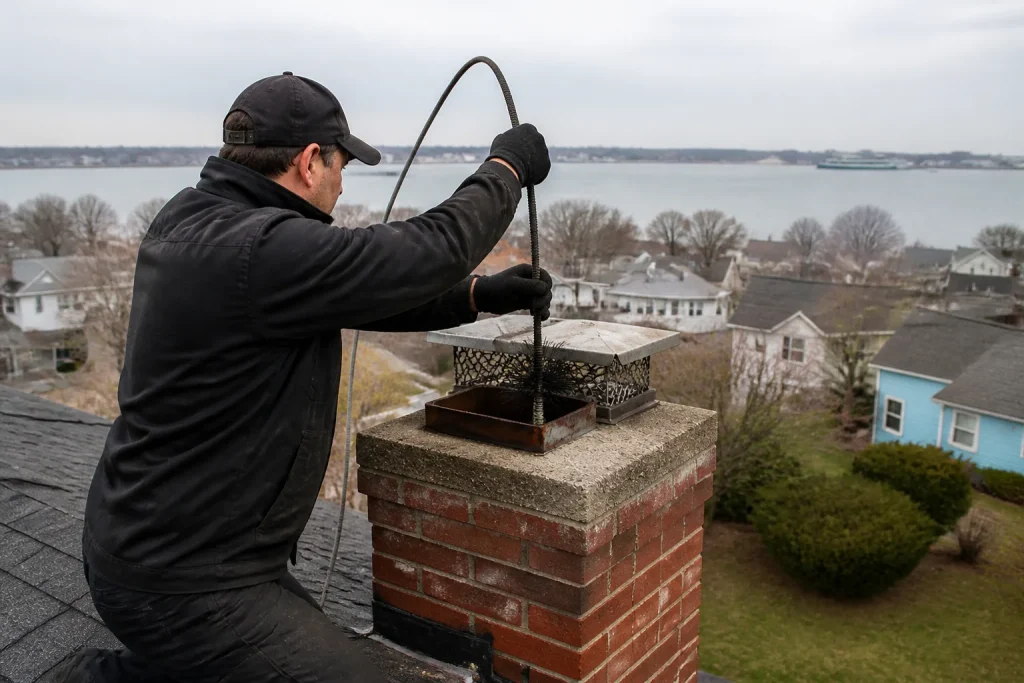
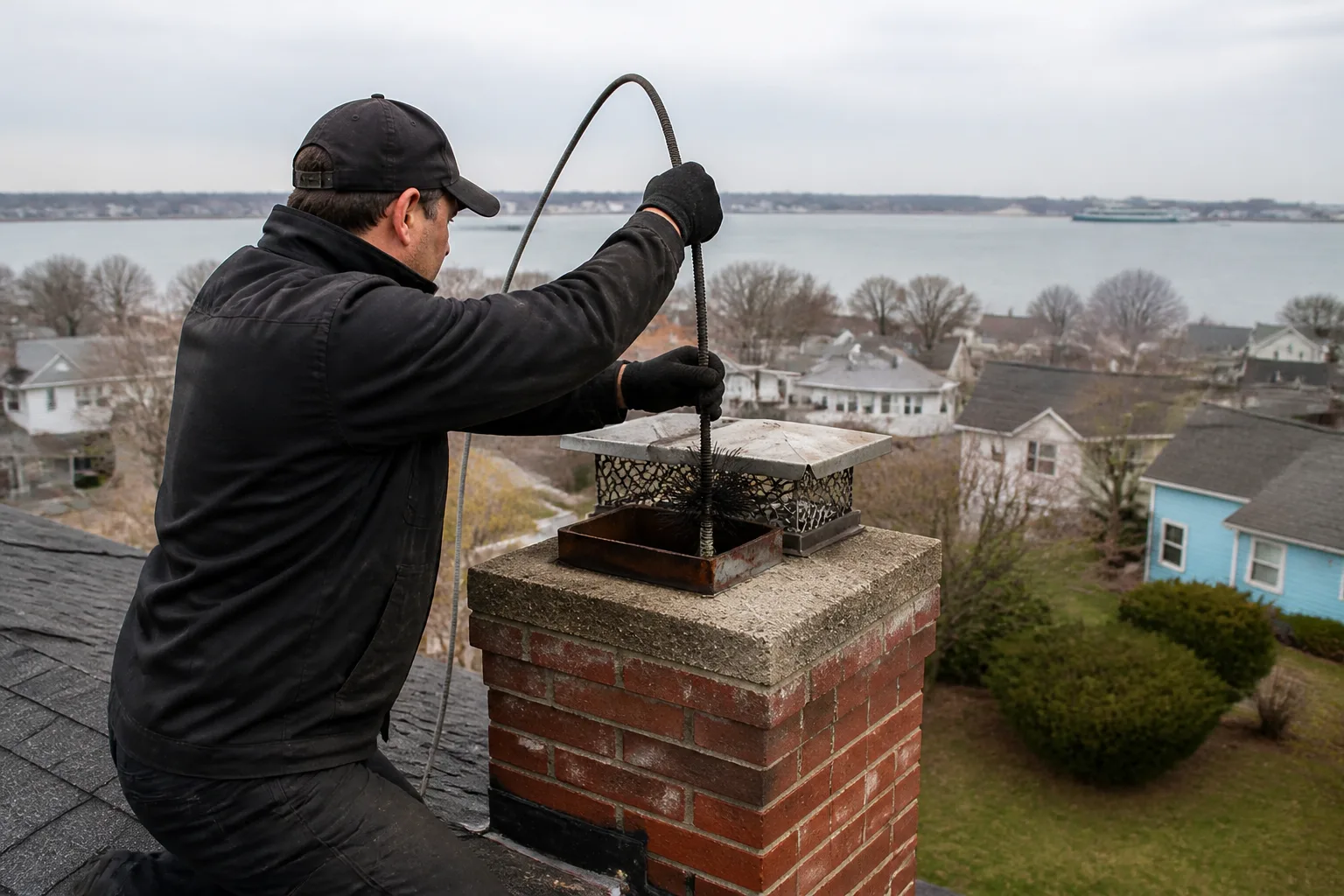
Emergency Chimney Sweep Near Me: What Great Kills Homeowners Should Do First
If you’re smelling smoke inside your home with the damper open, calling a chimney sweep isn’t your first move, and doing so could delay you getting the right help by hours. Most chimney “emergencies” people search for at midnight in Great Kills aren’t cleaning problems at all. They’re diagnosis problems, and the first five minutes matter more than the phone call. Here’s how to tell which situation you’re actually in before anyone shows up.
If you’d rather not sort through it yourself, call (866) 937-8578. We answer 24/7. Fast dispatch from 7am to 7pm, Sunday through Friday.
Why “Emergency Chimney Sweep” Is Usually the Wrong Search
A dirty chimney doesn’t create emergencies. It creates slow, quiet problems that show up over months and years. When something goes wrong suddenly, the cause is almost always one of four things: a chimney fire, a blockage, carbon monoxide getting into the house, or a structural failure at the top of the system. None of those four are fixed by sweeping. They’re fixed by inspecting first, then repairing what the inspection shows.
That’s why “inspect first, recommend second” is how we approach every call, urgent or not. A sweep cleans soot and creosote out of a flue that’s structurally sound. An emergency needs a Level 2 inspection, which means a camera run through the flue to see the actual interior condition, along with a look at the firebox, damper, and the cap and crown at the top. Without that, anyone who tells you what’s wrong is guessing.
In Great Kills, most homes were built with masonry chimneys that have seen decades of wood smoke. A flue that’s held up fine for thirty winters can crack a tile or open a joint in a single hot fire. The cleaning wasn’t the urgent need. Finding that damage was.
Scenario 1: You Think You Just Had a Chimney Fire
A chimney fire is the one scenario where you act before you call anyone. Call 911 if you see flames or heavy smoke coming from the top of the chimney, hear a roaring sound like a freight train, or the chimney itself is hot to the touch. Get everyone out of the house first. That’s not a chimney sweep call. That’s a fire department call.
Many chimney fires are quiet, though. A low-oxygen fire burning in a creosote-glazed flue can smolder and go out without flames ever showing. Signs that one has happened include:
- Puffy, honeycombed creosote inside the flue, especially black or gray and swollen-looking
- Warped or discolored damper
- Cracked flue tiles visible from the firebox
- Creosote flakes on the roof or ground near the cap
- A strong, sudden burnt smell in the house
What not to do: don’t light another fire to “burn it out,” and don’t assume it’s fine because the house didn’t fill with smoke. Creosote that’s already ignited once will ignite again. The flue needs a camera inspection before the fireplace is used at all.
Scenario 2: Smoke Rolling Into the Room With the Damper Open
Smoke backing into the room with an open damper almost always means the flue is blocked, undersized, or cold. The most common culprits are a bird or squirrel nest, a collapsed flue tile, a heavy creosote buildup near the top, or a cap that’s been crushed by a fallen branch.
What to do right away:
- Open a window near the fireplace to relieve negative pressure in the house.
- Check that the damper is actually open and not stuck half-closed. Some dampers fail in the closed position and feel open when they aren’t.
- Turn off kitchen and bath exhaust fans. They can pull smoke down a flue in a tight house.
- Put the fire out safely and don’t relight until the flue is inspected.
What not to do: don’t try to clear a blockage from the roof yourself, and don’t run a chimney brush up from the firebox without knowing what’s in there. A dislodged nest can drop into the smoke shelf and make things worse. This is a case where a camera inspection tells you what you’re dealing with in a few minutes.
Scenario 3: The Carbon Monoxide Alarm Is Going Off
If a CO alarm sounds and there’s any chance it’s tied to your fireplace or heating appliance, get everyone out and call 911 or your gas utility’s emergency line. Don’t open windows to “air it out” first and don’t try to find the source yourself. Carbon monoxide is odorless and the alarm is telling you something specific: combustion gases are entering the living space.
Once the house is cleared and the source is confirmed, the chimney side of the problem needs a real diagnosis. Common causes we look for include a blocked flue, a disconnected or damaged liner, a cracked chimney crown letting water degrade the interior, and reverse draft from a house that’s too tightly sealed.
This is where the right materials matter. A deteriorated flue often needs relining, and that’s not a job for a generic brush-and-vacuum operation. We work with DuraFlex flexible stainless systems for relining and HeatShield for resurfacing a flue that’s compromised but still structurally sound. Both are professional-grade products, and the choice between them comes down to what the camera shows.
Scenario 4: Something Looks Wrong at the Top of the Chimney
Loose bricks, a cracked crown, a cap sitting crooked, or mortar crumbling at the roofline. These aren’t calls that need to happen at midnight, but they do need to happen soon. A damaged crown is the most common way water gets into a chimney, and water is what turns a small mortar repair into a full rebuild over a couple of winters.
What to do: take photos from the ground if you can see it safely, note where the damage is, and book an inspection. What not to do: climb onto the roof yourself, especially in wet or icy conditions, and don’t put off a visibly cracked crown because the fireplace still works.
In Great Kills, the roof pitch on a lot of older homes makes a chimney crown easy to see from the driveway and hard to reach safely. Our technicians have up to 10 years of experience, and that’s exactly the kind of assessment we’d rather do than have you attempt.
When to Call a Pro
Call us when any of the following is true:
- You’ve had a fire in the firebox and something felt or smelled wrong afterward
- Smoke is entering the room with the damper open
- A CO alarm has gone off near the fireplace or heating system
- You can see damage to the cap, crown, or brickwork from the ground
- Your last sweep was more than a year ago and you burn wood regularly
If you’d rather not guess, one call covers the whole chimney, from the firebox floor to the cap. We’ll inspect, run a camera if needed, and show you exactly what we find before recommending anything.
Related services in Great Kills: chimney sweep, fireplace repair, and chimney cap & crown work. Our full service list is on the Chimney Sweep Great Kills page.
The Follow-Up Inspection Nobody Books
The emergency response is the easy part. The follow-up within 30 days is what actually protects the house. Once a chimney fire, a blockage, or a CO event has happened, the flue needs a full Level 2 inspection to document what changed. Cracks that weren’t there before, glazed creosote that needs to come out, a liner that shifted from heat stress. All of it shows up in the weeks after, not necessarily on the day of.
That inspection also protects you if you ever sell. A documented report from a chimney professional is worth far more to a buyer’s inspector than a vague memory of “we had someone look at it once.”
The cap and crown get checked at the same time. A missing or damaged cap is one of the most common reasons a chimney fails within a few seasons of a repair. We install caps and crowns using Gelco and Famco components engineered for exactly that job. It’s a small piece of the system that does a lot of the work.
The Bottom Line
Before you dial anyone, get the scenario straight. Chimney fire, blockage, CO intrusion, or structural damage. Each one has a different first move, and none of them are solved by sweeping alone. The right response is an inspection that produces evidence you can see, followed by a repair recommendation based on what the camera actually shows. If a sweep is what’s needed, we’ll tell you. If it’s a liner or a crown, we’ll show you why. And if the work can safely wait a season, we’ll say that too.
If you’re in Great Kills and need help, Chimney Sweep Great Kills offers free estimates. Call (866) 937-8578. We answer 24/7. Fast dispatch from 7am to 7pm, Sunday through Friday. A call outside dispatch hours is booked into the next opening, Sunday through Friday, 7am to 7pm.
Frequently Asked Questions
Yes, we can often schedule a same-day visit for genuinely urgent calls, and the first thing we’ll do is inspect rather than sweep. A sweep alone won’t tell you whether a fire cracked a tile or whether a nest is lodged past the smoke shelf. The camera inspection is the actual urgent need in most cases.
The estimate is free, and the price is set per job by the written estimate before any work begins. We don’t charge a separate fee for the call-out or add a premium for urgent timing. What the job costs depends on what the inspection finds.
Open a window near the fireplace, put the fire out safely, and check that the damper is fully open. Turn off any kitchen or bath exhaust fans. Then call (866) 937-8578. We answer 24/7. Don’t try to clear the flue from the roof yourself.
Because heat damage and hidden cracks often show up after the fact, not during the initial response. A Level 2 inspection after a fire or CO event documents what changed inside the flue. It also gives you a clear record if you ever sell the house. Book it as soon as the emergency has passed.
Written by the team at Chimney Sweep Great Kills.
Need Chimney Cleaning Help?
Call Chimney Sweep Great Kills - the local pro we connect you with is licensed and insured, here with fast help in Great Kills.
(866) 937-8578