
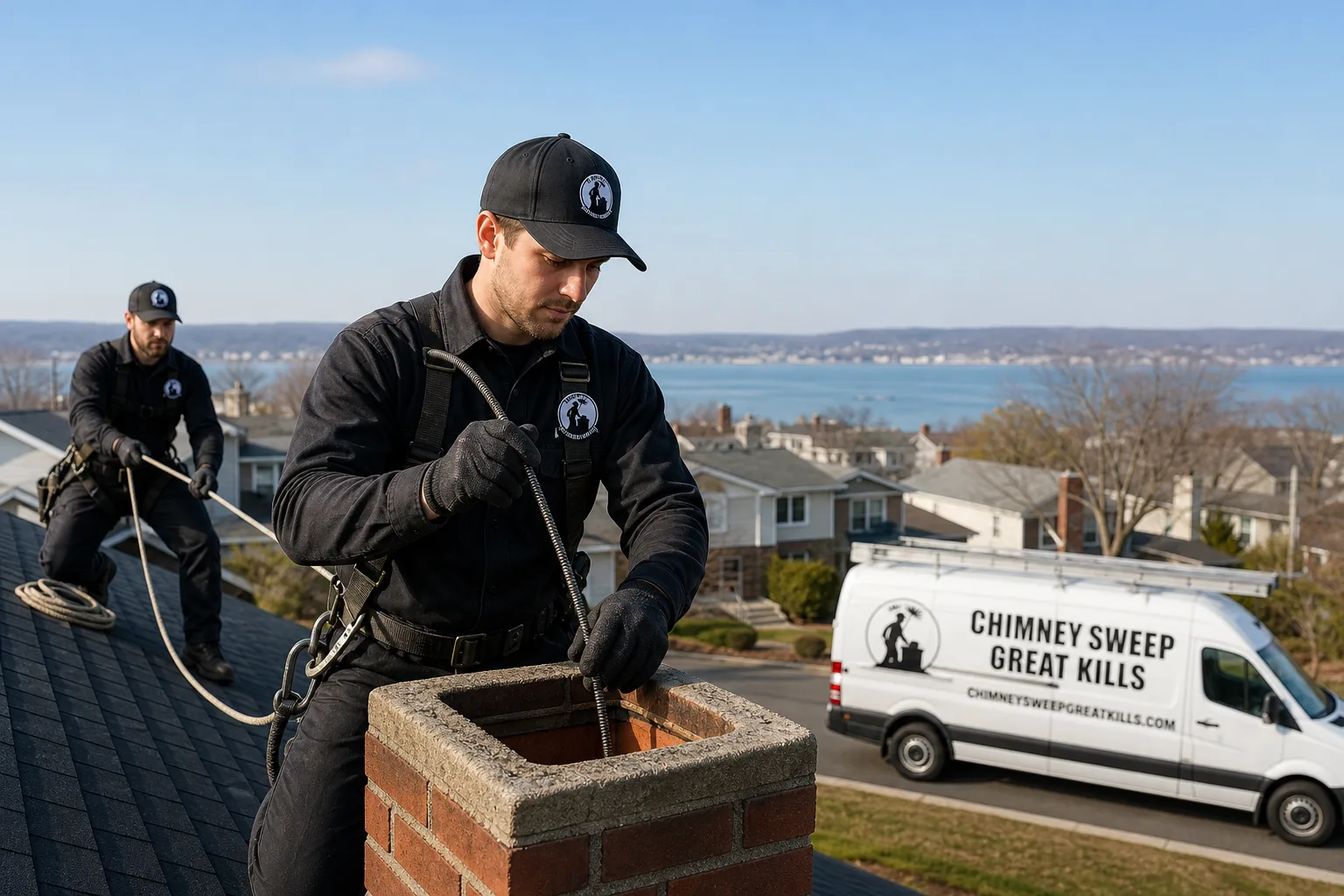
 Sweep & inspection
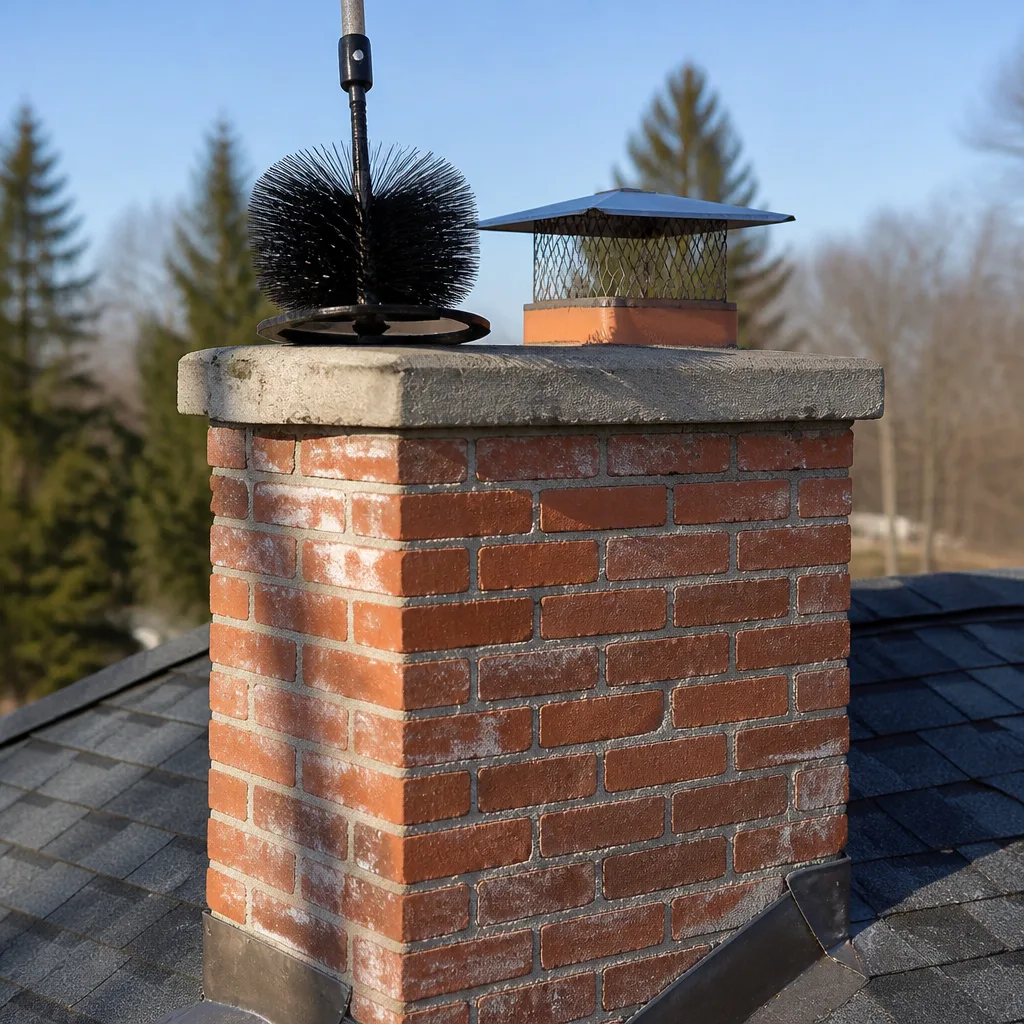
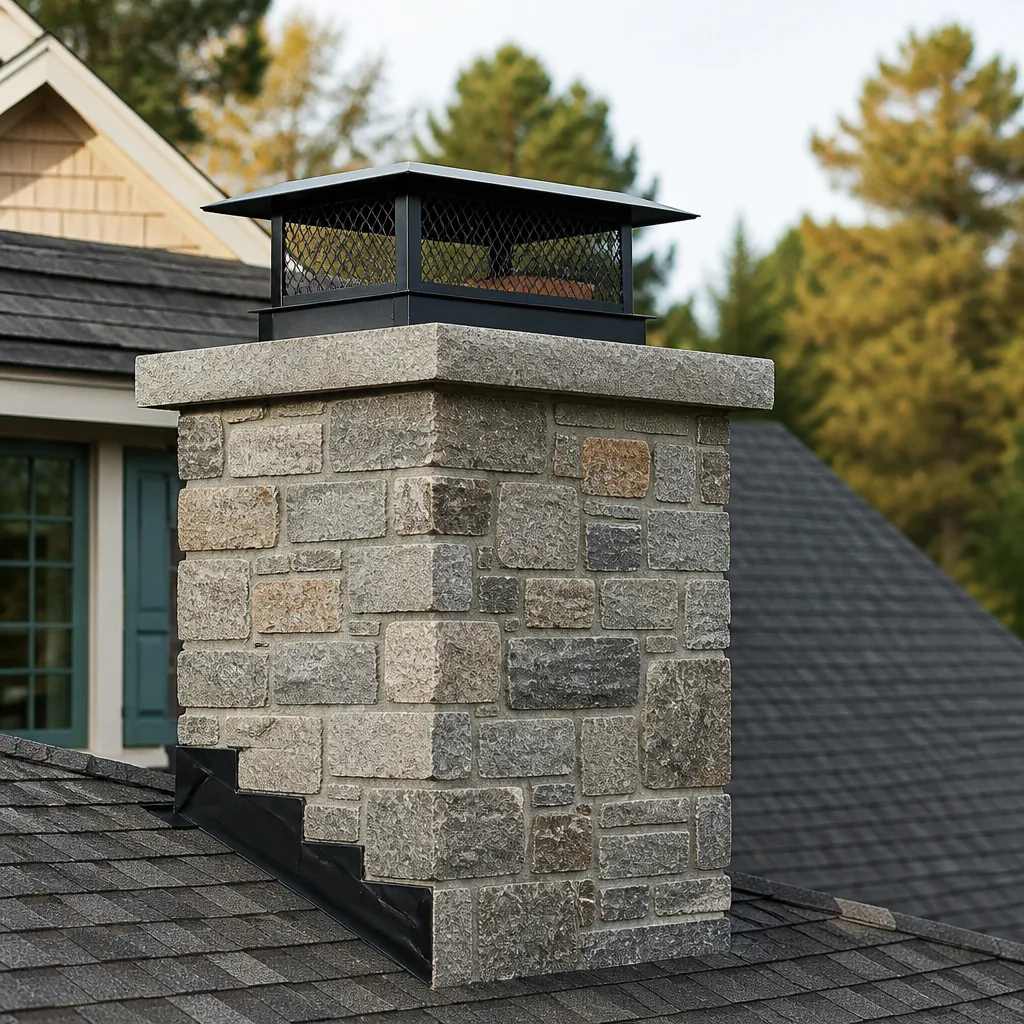 Caps & crowns
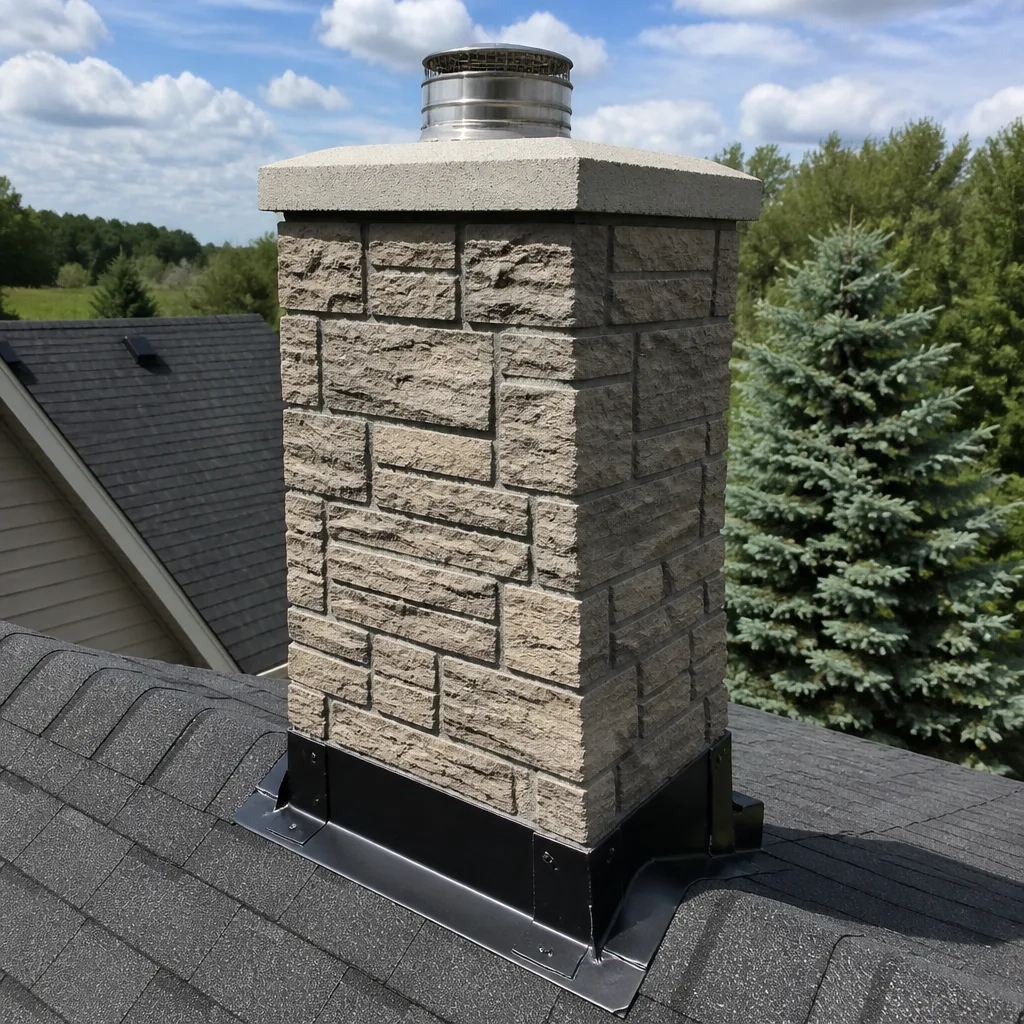 Flue relining
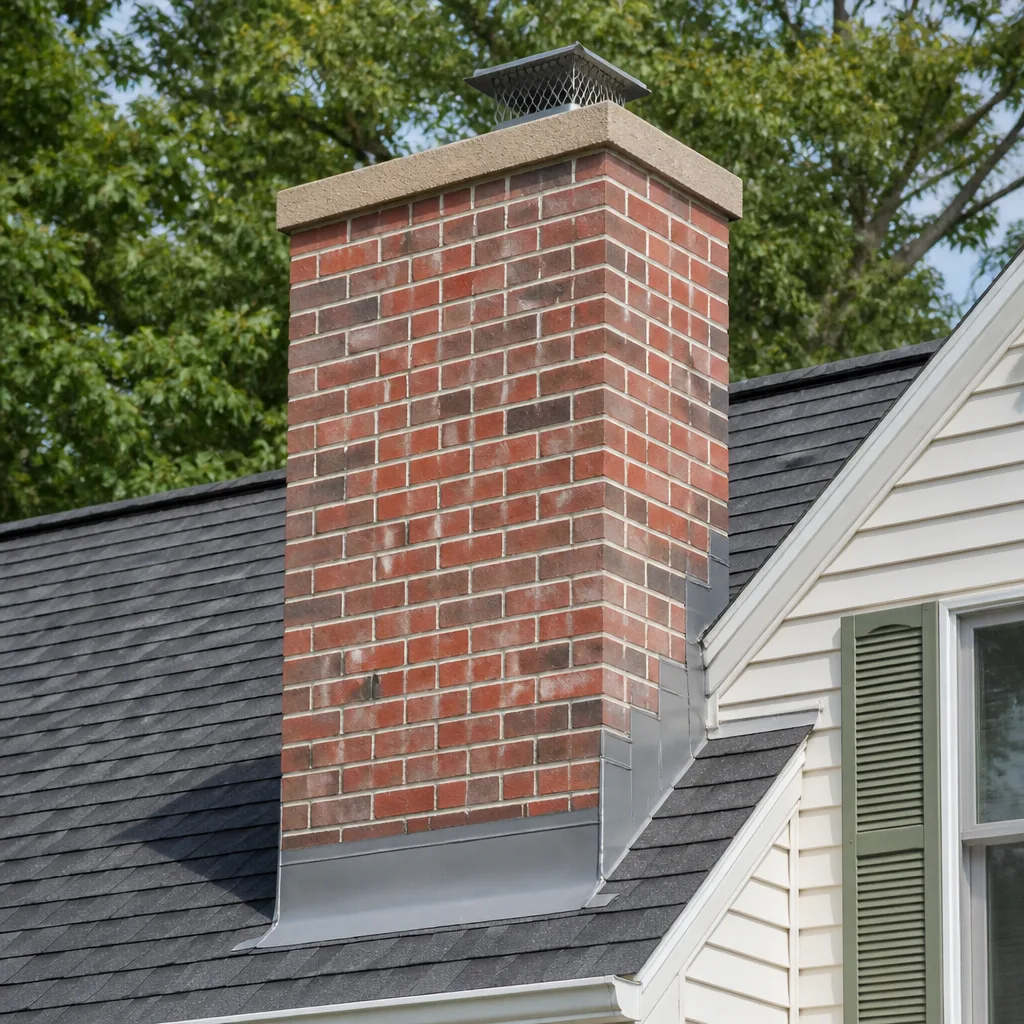 Masonry repair
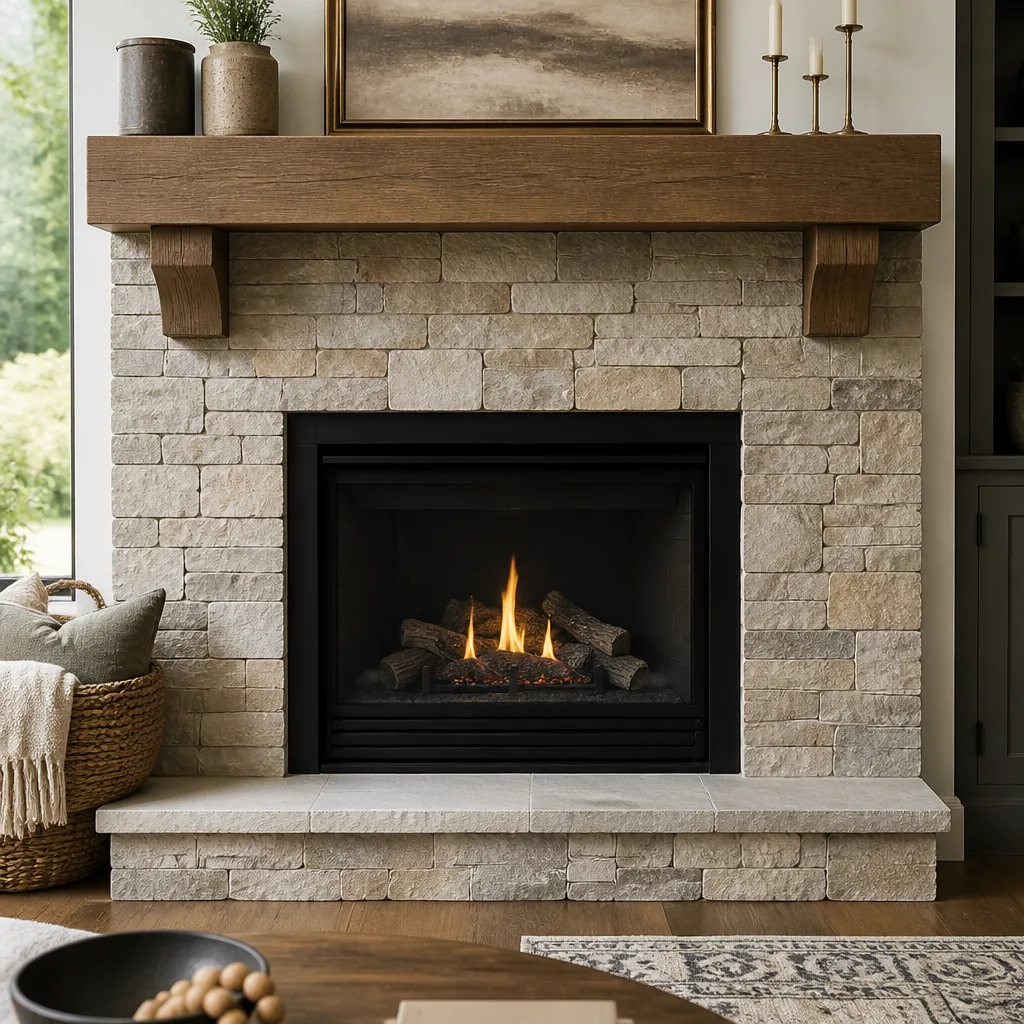 Gas fireplace service
Level 1 sweep and inspection to the NFPA 211 annual standard - flue, crown, cap, and flashing checked and photographed
Chimney sweep logs do not sweep chimneys. They loosen some creosote - which then falls where a brush and vacuum still have to collect it.
Trusted Fireplace Repair for Great Kills Homeowners
A fireplace that smokes into the room, a damper that won’t close, or a pilot light that refuses to stay lit is a repair problem, not a cleaning problem, and it needs a specialist who works on the hearth itself. Chimney Sweep Great Kills handles fireplace repair from the firebox floor to the cap, so gas and wood-burning hearths get diagnosed and fixed by one contractor instead of passed between a sweep and a handyman. Our technicians have up to 10 years of experience, and we inspect first and recommend second, so you see the evidence before anyone quotes a repair. We answer 24/7 at (866) 937-8578 and offer same-day repair when the schedule allows.
What Our Fireplace Repair Service Includes
Fireplace repair covers the parts of the hearth you actually touch and watch: the firebox, the damper, the insert, the gas burner and pilot assembly. Each one fails in its own way, and each one gets its own diagnosis. Here’s what we handle across Great Kills homes.
Gas Fireplace Repair
Gas fireplaces fail quietly: a weak flame, a burner that lights unevenly, or a log set that soots up long before it should. Those symptoms usually point to a clogged burner orifice, a drifted air shutter or a venting problem, and they’re worth diagnosing rather than ignoring because an improperly burning gas hearth can produce carbon monoxide. We test the burner, check the venting path, and confirm the fireplace is drafting and combusting the way it was built to. If the fix is a burner cleaning or adjustment, we say so; if it’s a deeper venting issue, you’ll see it in the inspection findings before we recommend anything.
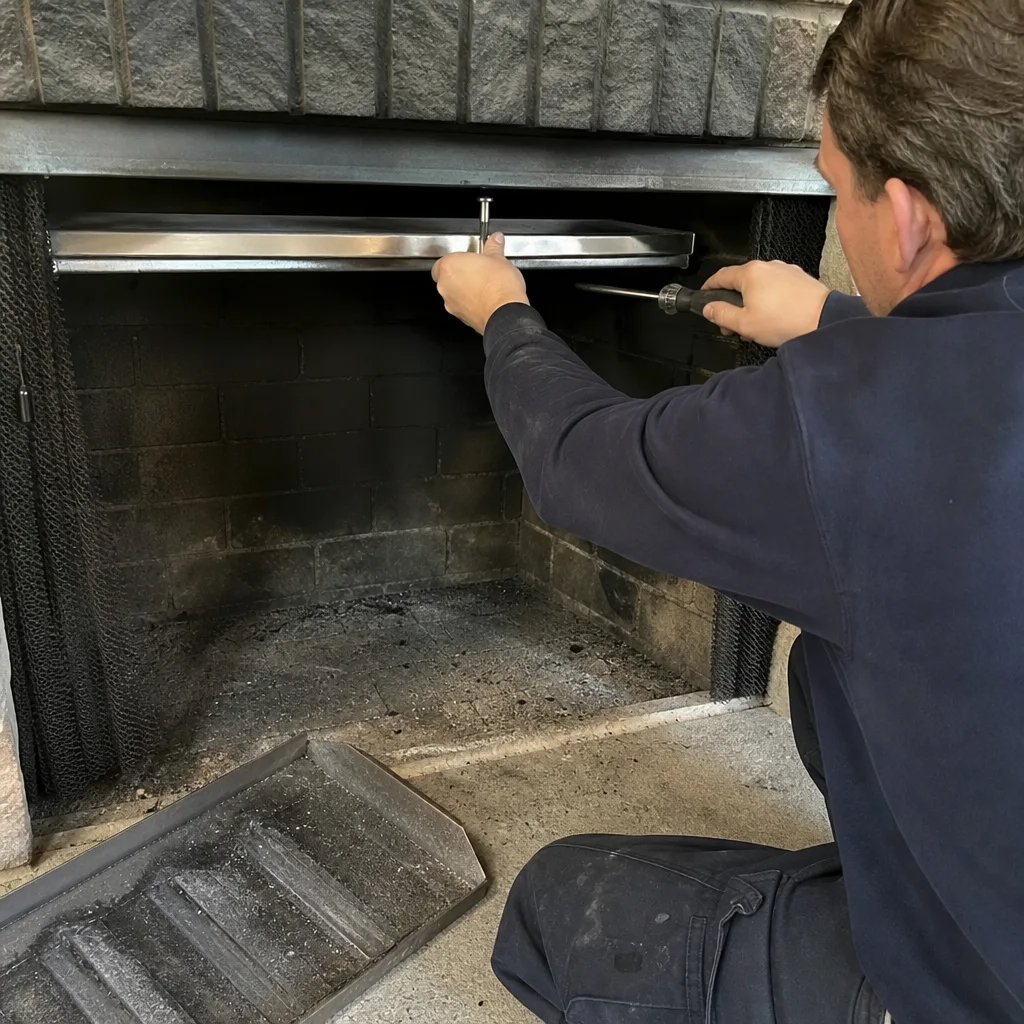
Wood Burning Fireplace Repair
A wood-burning fireplace that drafts poorly, smokes at the opening or leaves creosote faster than it should has a repair problem somewhere in the system. Common causes are a firebox that’s cracked or spalled, a smoke shelf packed with debris, or a damper that no longer seats properly. We inspect the firebox and damper together, because a damaged firebox and a leaking damper often show up as the same symptom: smoke where it shouldn’t be. Repairing the firebox before it becomes a rebuild is the reason we inspect masonry closely on every wood-burning call.
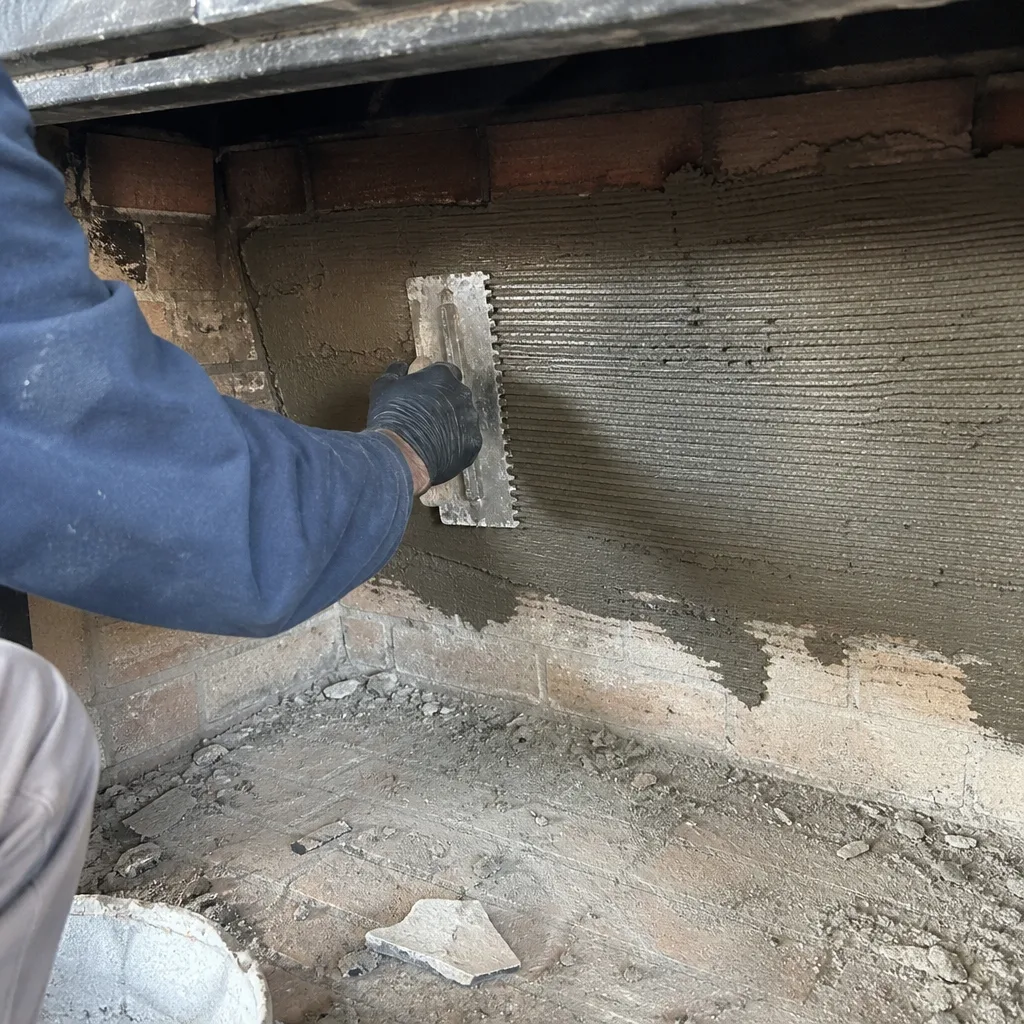
Fireplace Insert Service
An insert is a heating appliance with its own flue connection, fan and gaskets, and it needs service separate from the surrounding masonry fireplace. When an insert loses heat output or its glass blackens quickly, the cause is usually a failed gasket, a blocked flue connection or a fan that’s stopped moving air. We service inserts by pulling the appliance far enough to inspect the liner connection and the firebox behind it, then re-sealing it so it drafts correctly when it goes back in.
Damper Repair
The damper is the metal door above the firebox that controls draft, and it’s the single most-used moving part in a wood-burning fireplace. A damper that sticks open wastes heat up the chimney all winter; one that won’t open fully causes smoke to roll into the room. We repair or replace damper assemblies, including top-sealing dampers, and we check the frame and firebox throat while we’re in there so a new damper seats against sound masonry.
Firebox Repair
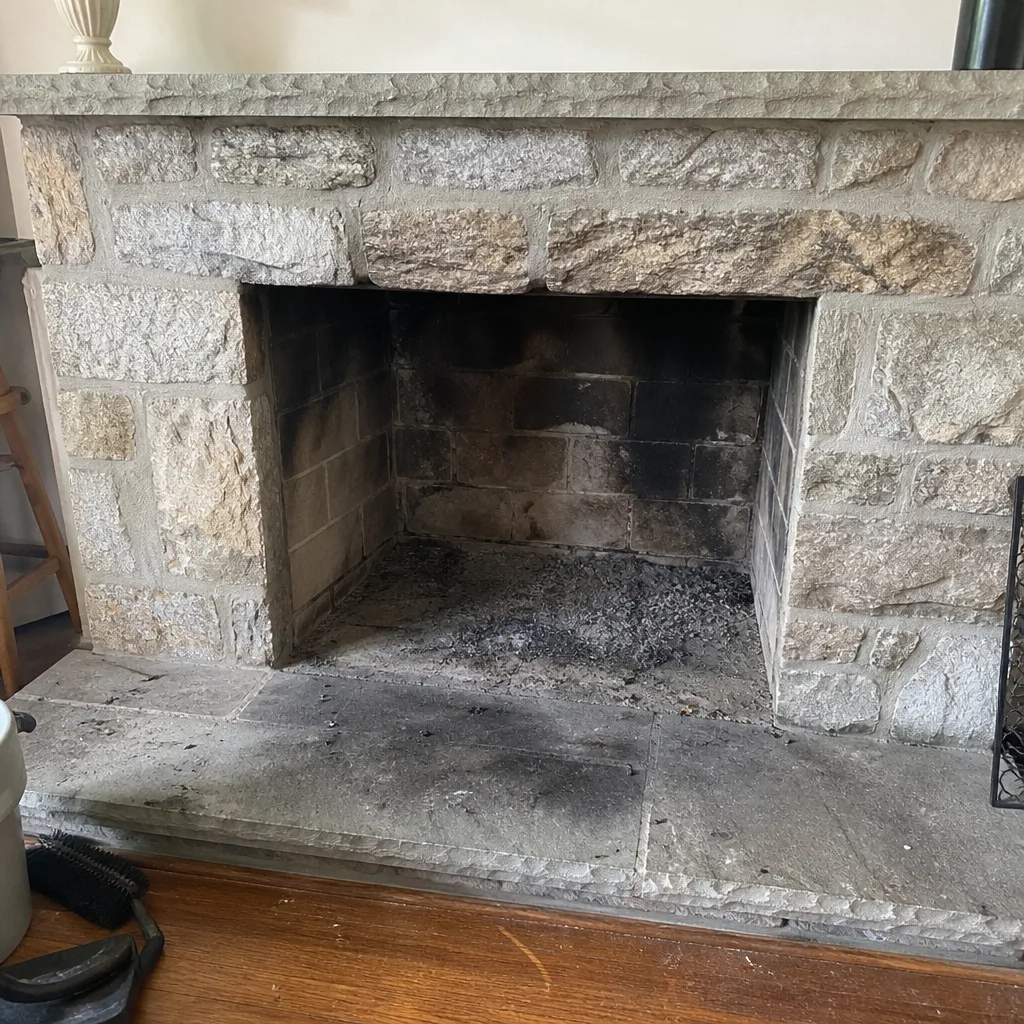
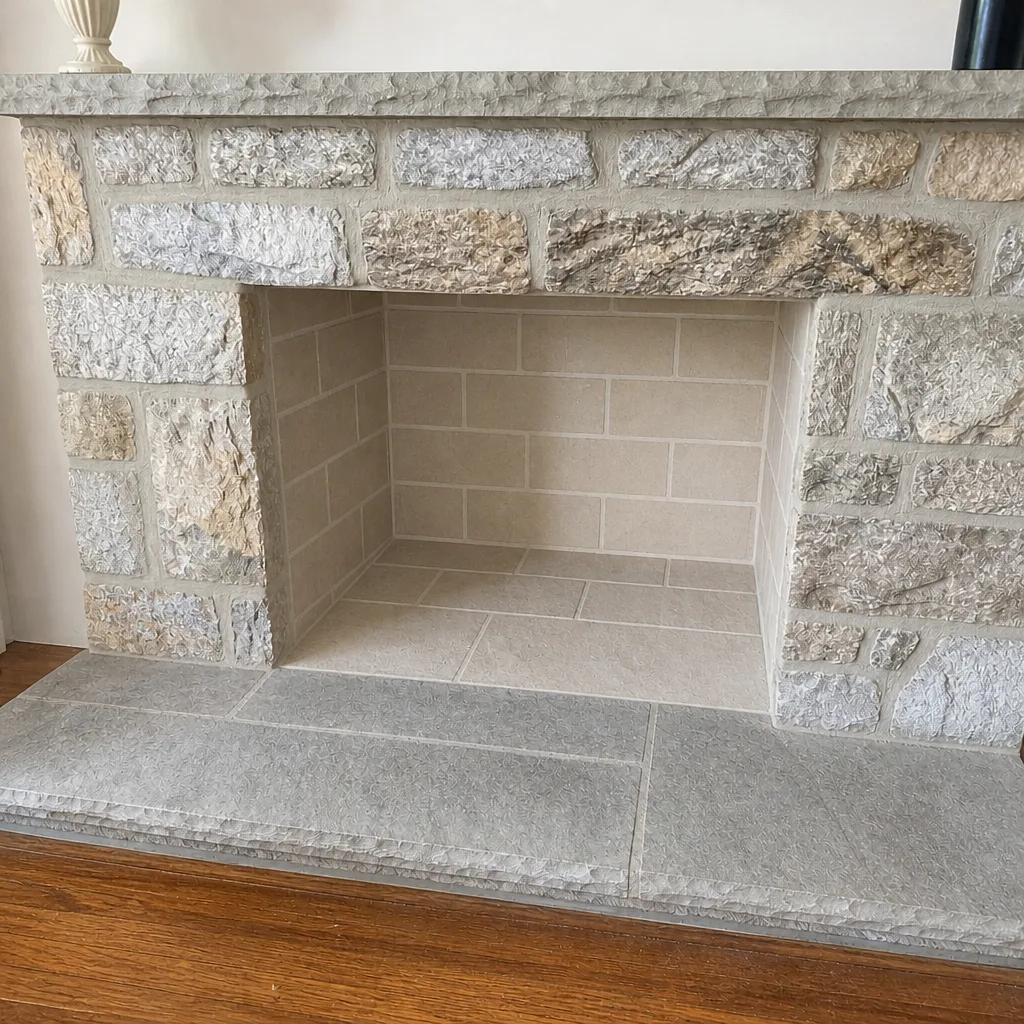
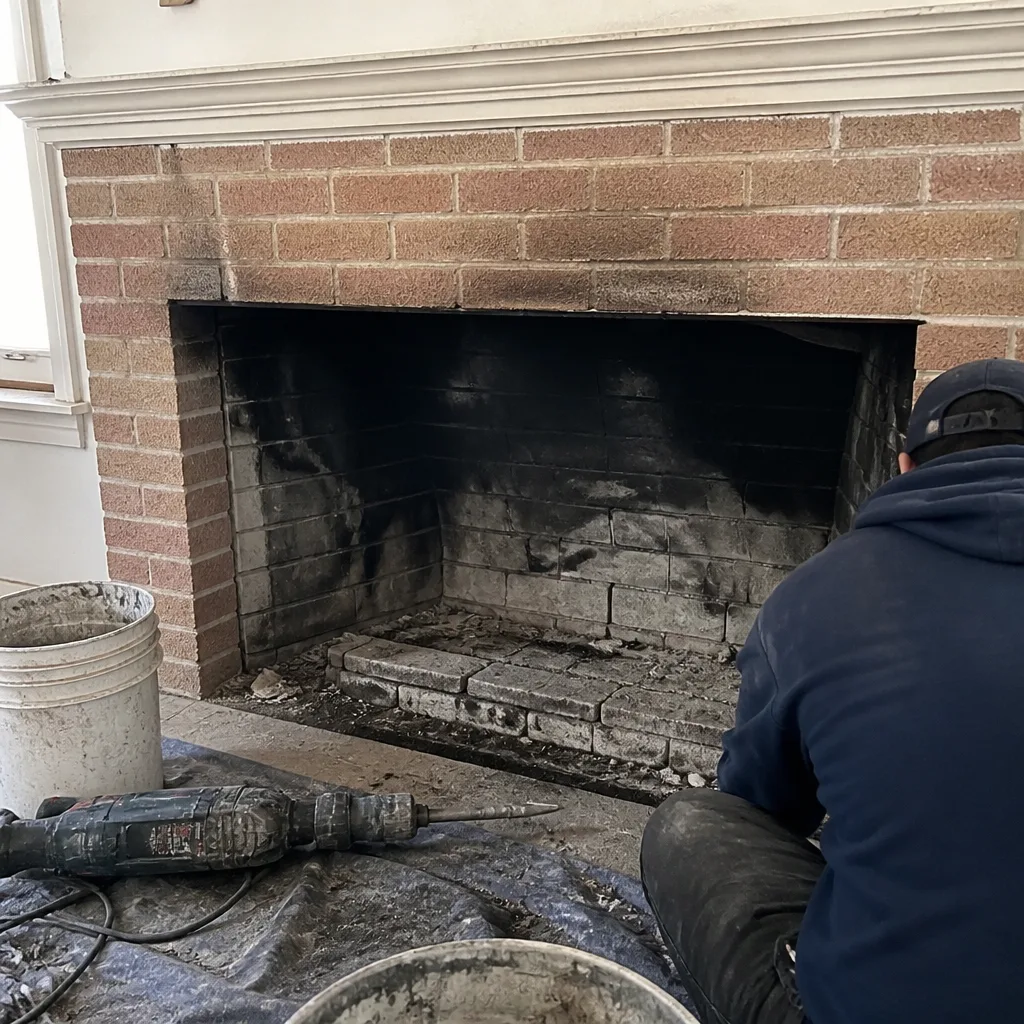
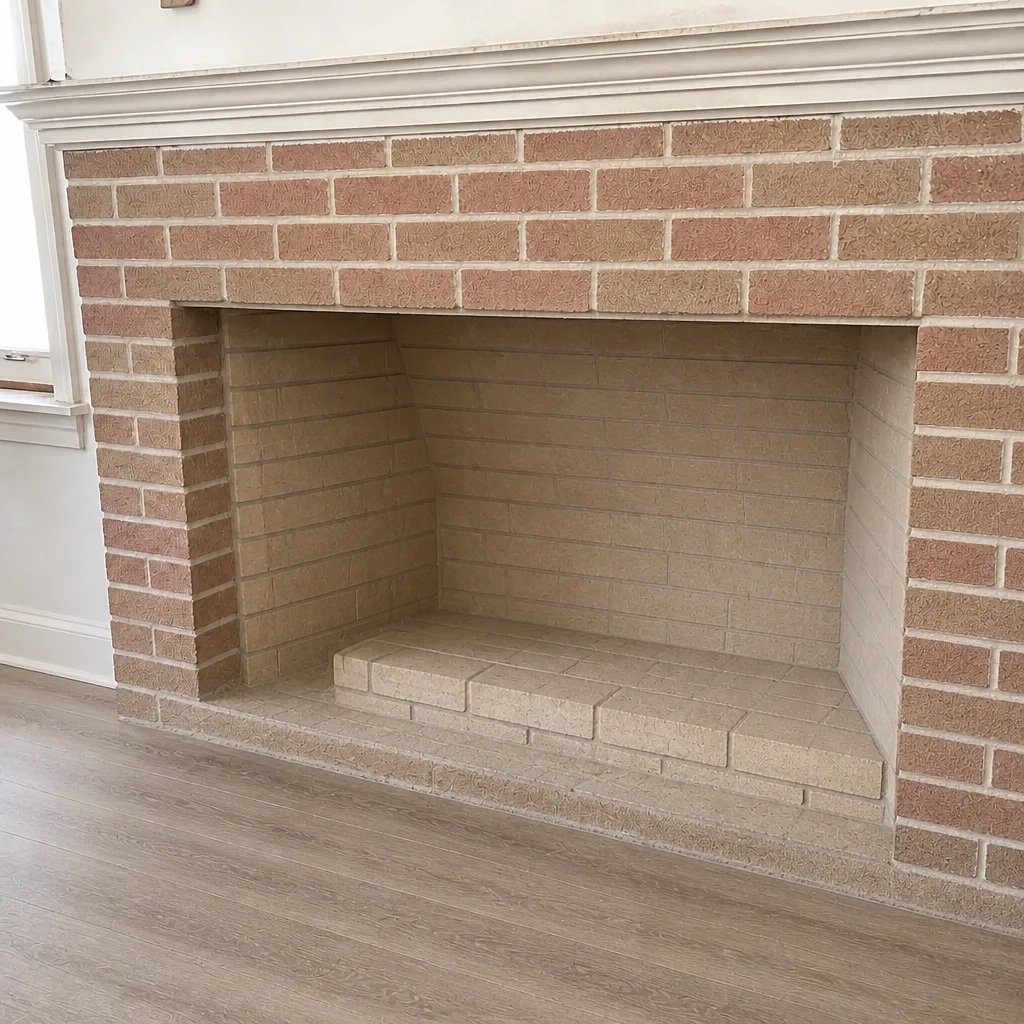
The firebox takes the direct heat of every fire, and masonry fireboxes crack, spall and lose mortar joints over time. Hairline cracks in firebrick can let heat reach the structure behind the firebox, which is why we treat firebox cracks seriously rather than cosmetically. We rebuild fireboxes with new firebrick and refractory mortar, and where the firebox floor is worn we restore it so the fire sits on a solid, heat-rated surface.
Pilot Light Repair
A gas fireplace pilot that won’t stay lit usually has a failed thermocouple, thermopile, or a dirty pilot orifice starving the flame. It’s a small part causing a big inconvenience, and it’s usually straightforward to diagnose with a multimeter once we reach the assembly. We test the pilot circuit, replace the failed component, and confirm the main burner lights reliably before we leave. If the pilot problem traces back to gas pressure, we flag it and recommend a licensed gas professional handle anything on the supply side.
Styles & brands we work with
- Sweep & inspection
- Caps & crowns
- Flue relining
- Masonry repair
- Gas fireplace service
Brands We Service for Fireplace Repair
We work with professional-grade chimney and hearth components, and that matters when a repair depends on matching the right part to the right system. We service Famco venting and cap components and know where their connections wear and loosen over time. We also work with Copperfield products in fireplace and chimney applications, and we understand how their assemblies fit together so a repair doesn’t turn into a workaround. On the liner and flue side, we use DuraFlex flexible stainless systems where a deteriorated flue has to be relined as part of a fireplace repair, and we apply HeatShield resurfacing where the flue can be restored without a full tear-out. Whether you have Famco, Copperfield, DuraFlex, HeatShield or any other make, we can help.
Brand matters most at the point of failure. A damper that won’t seat, a cap that’s rusted through, a flue connection that’s come loose behind an insert; each of those repairs goes better when the technician recognizes the product and knows its weak points. Because we handle chimney sweep Great Kills work alongside our repair services, we see these systems across the neighborhood and can usually identify a component on sight. Professional-grade materials mean the repair you get is built to last, not patched with whatever’s on the shelf. One contractor for the whole chimney means fewer callback surprises and less confusion about who’s responsible for what.
Signs You Need Fireplace Repair Right Now
Some fireplace problems are cosmetic. Others are worth addressing before the next fire. Here’s what to watch for in a Great Kills home.
- Smoke rolling into the room. Smoke coming out of the fireplace opening instead of up the flue usually points to a damper, smoke shelf or draft problem, and it’s a sign the system isn’t venting as designed. Repair it before the next fire rather than opening a window and hoping.
- Cracks or crumbling in the firebox. Hairline cracks in firebrick or loose mortar joints let heat reach the structure behind the firebox, and that’s a fire risk worth taking seriously. Firebox repairs done early are far cheaper than a rebuild.
- A pilot light that won’t stay lit. A gas fireplace whose pilot goes out repeatedly has a failing thermocouple or thermopile, or a dirty orifice. It’s a small repair, but until it’s done the fireplace won’t run safely or reliably.
- Damper that sticks, jams or won’t close. A damper that won’t seal wastes heated air up the chimney and lets cold air down when the fireplace is idle. A damper that won’t open fully causes smoke indoors. Either way, it’s an easy thing to fix and a bad thing to leave.
- Soot streaks, blackened glass or a persistent odor. Dark staining above the opening, cloudy insert glass or a smell that lingers when the fireplace is off all point to incomplete combustion or a venting problem. Have it inspected before the next fire, especially with a gas unit where carbon monoxide is a real safety concern.
Our Fireplace Repair Process – Step by Step
Every fireplace repair starts with an inspection, and every inspection is documented so you can see what we saw. Here’s how a typical repair call runs.
- 1
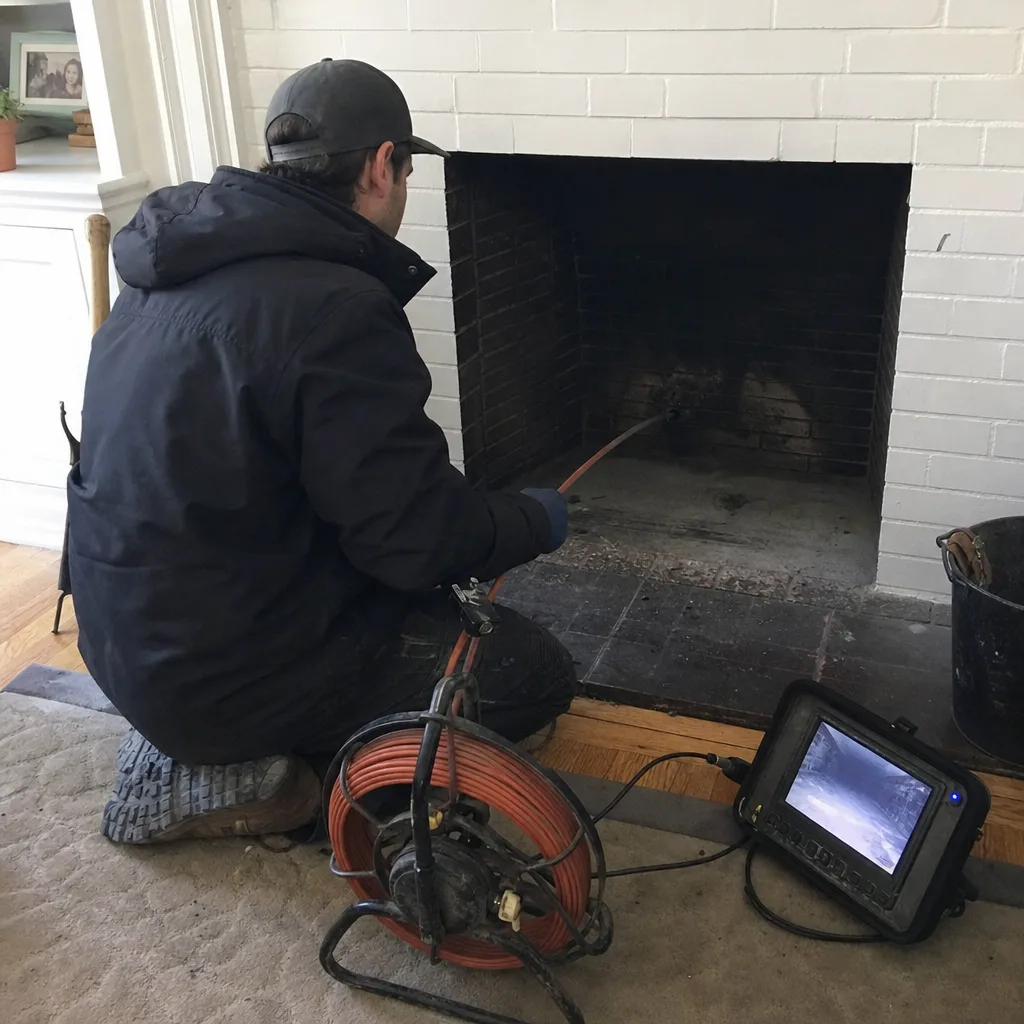
Inspection and diagnosis. We look at the firebox, damper, insert, burner and flue connection, and we run a camera down the flue when the fireplace’s condition is unclear. We photograph what we find, so nothing is recommended on our word alone.
- 2
Written findings and a flat-price quote. You get the findings in writing with photos, plus a flat price for the repair before we start. No surprise line items, and no work begins until you approve the number.
- 3
The repair itself. Depending on the diagnosis, this is a damper replacement, a firebox rebuild, a pilot circuit repair, an insert re-seal, or a liner repair with HeatShield or DuraFlex where the flue has to be brought back into service. We protect the hearth and floors while we work.
- 4
Testing and a smoke or draft check. When the repair is complete, we run the fireplace and confirm the draft, the damper operation and the burner or pilot function before we call it done. If something doesn’t test clean, we don’t leave it that way.
- 5
Photo report and recommendations. You get the before-and-after documentation, plus a plain answer on what else, if anything, the system needs. If work can safely wait, we tell you so, and we tell you what to watch for in the meantime.
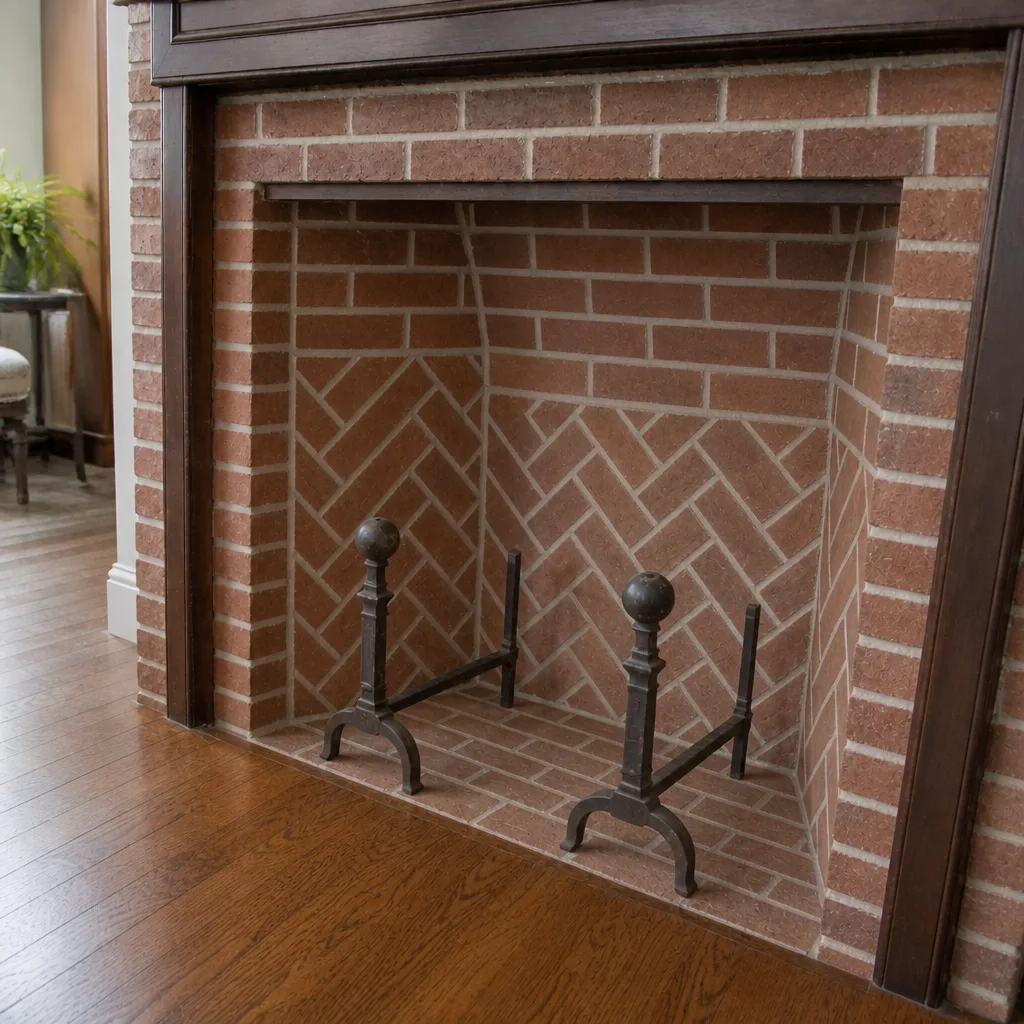
See the difference
 Before
 After
 Before
 After
 Before
 After
How Much Does Fireplace Repair Cost in Great Kills?
A typical damper repair in Great Kills runs $150 – $450 depending on the assembly. Pilot light repair runs $150 – $350, firebox repair $600 – $2,500 depending on the extent of the rebuild, insert service $200 – $500, and gas fireplace repair $200 – $600 depending on the burner or venting work involved. These are typical ranges, and the written estimate sets the final price.
What moves the number is the scope: whether the firebox needs firebrick and refractory mortar or just crack repair, whether the flue is sound or has to be resurfaced, and whether the fireplace is gas or wood-burning. A camera inspection and photo report are included, so you see exactly what’s driving the cost before you approve it. There’s no service-call or trip fee; the estimate is free, and it’s set per job. If the honest answer is that a component has years left, you’ll hear that, and you’ll hear which repairs are safety items versus maintenance ones. To avoid overpaying, ask for the photo evidence behind any recommendation, and get the price in writing before work starts.
| Repair Type | Typical Cost Range in Great Kills |
|---|---|
| Pilot light repair | $150 – $350 |
| Damper repair or replacement | $150 – $450 |
| Insert service (gasket, flue connection, fan) | $200 – $500 |
| Gas fireplace repair (burner, venting) | $200 – $600 |
| Firebox repair / rebuild | $600 – $2,500 |
Fireplace Repair Near Great Kills – Our Service Area
We cover Great Kills and nearby neighborhoods including Annadale, Eltingville, New Dorp, Grant City, Charleston, New Springville, Westerleigh, South Beach, Rosebank, Stapleton and Mariners Harbor. Response times depend on where you are and the day’s schedule. If you’re in Annadale or Eltingville and need the same service, you’re looking at our fireplace repair and fireplace repair pages, and for the full system beyond the hearth, see Chimney Sweep Great Kills.
Serving Great Kills, NY – Our Local Coverage Area
We serve Great Kills and nearby communities. Use the map below to see the area we cover. If you’re nearby, we can almost certainly help.
Frequently Asked Questions – Fireplace Repair in Great Kills
Fireplace repair is the work on the hearth and firebox: dampers, firebox masonry, inserts, gas burners and pilots. Chimney sweeping is cleaning the flue, and it’s a different job, though the two are related, and one often turns up the other. We handle both, so a sweep can surface a damaged damper, and a repair call can reveal a flue that needs cleaning first. Inspect first, recommend second: you get findings either way.
Small repairs like a pilot light or a damper take about an hour on site. Insert service runs one to two hours, and a firebox rebuild can take most of a day depending on the extent of the work. We tell you the expected duration when we give you the quote, so you can plan the day around it.
Typical costs in Great Kills range from $150 – $350 for pilot light repair, $150 – $450 for damper work, $200 – $500 for insert service, $200 – $600 for gas fireplace repair, and $600 – $2,500 for firebox repair or rebuild. The written estimate sets the final price, and the estimate itself is free. Call (866) 937-8578 for an exact quote – estimates are free.
Yes, we service Famco and Copperfield components as part of our fireplace and chimney repair work. We also use DuraFlex and HeatShield on the flue side when a fireplace repair requires relining or resurfacing. Whatever brand is in the firebox, we can diagnose it and tell you what the repair involves.
Same-day service is available when the schedule allows. We answer 24/7 at (866) 937-8578, and fast dispatch runs from 7am to 7pm, Sunday through Friday; we’re closed Saturday. A call outside dispatch hours is booked into the next opening, Sunday through Friday, 7am to 7pm.
Warranty terms are tied to the specific repair and material, so they’re written into your estimate and confirmed before work begins. We don’t make blanket promises; we put the coverage for your job in writing. That’s part of why one contractor for the whole chimney matters: there’s no confusion over who’s responsible.
Clear the hearth area and the floor in front of the fireplace, and remove anything decorative or flammable from the mantel. If it’s a gas fireplace, note where the gas shutoff is; we’ll ask before we work on the burner. Make sure the flue hasn’t been used for at least 24 hours before a repair visit, so everything is cool and safe to handle.
Schedule Your Fireplace Repair Service in Great Kills Today
Whether it’s a pilot light, a damper or a firebox rebuild, you can get it handled by one call. We inspect before we recommend, show you the photo evidence, and give you a flat price before any work starts. Call (866) 937-8578 for a free, no-obligation estimate – we answer 24/7, with fast dispatch from 7am to 7pm, Sunday through Friday.
Written by the team at Chimney Sweep Great Kills.